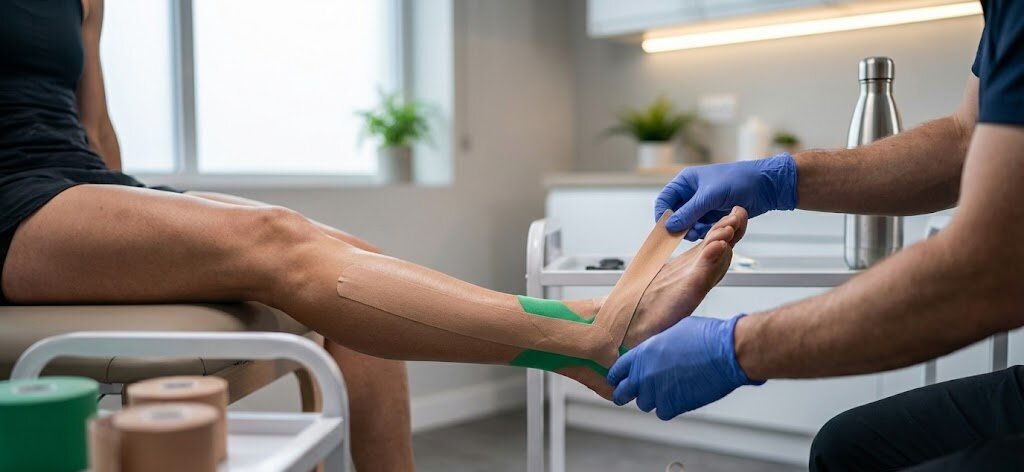
Running injuries affect 20-80% of runners annually, depending on the population studied. The good news? Most running injuries are preventable with proper training practices and early intervention. Understanding the science behind common injuries helps you stay healthy and running.
The Big Picture: Why Runners Get Injured
Training Errors: The Primary Cause
Research consistently shows that the vast majority of overuse running injuries are directly related to training errors - specifically, doing too much, too soon.
Common training errors:
- Increasing weekly mileage too quickly
- Adding intensity before building base
- Not taking adequate recovery days
- Ignoring early warning signs
- Running through pain
The 10% Rule
A widely-cited guideline suggests not increasing weekly mileage by more than 10% per week. While research shows this rule isn’t absolute, the principle holds: gradual progression reduces injury risk.
The Five Most Common Running Injuries
1. Patellofemoral Pain Syndrome (Runner’s Knee)
What it is: Pain around or behind the kneecap, typically worsening with running, stairs, or prolonged sitting.
Prevalence: Accounts for 15-20% of all running injuries.
Causes:
- Weak hip and gluteal muscles
- Tight quadriceps and IT band
- Overpronation
- Increased training load
Prevention strategies:
- Strengthen hip abductors and external rotators
- Single-leg squats and step-downs
- Gradual training progression
- Proper footwear for your gait
When to seek help: If pain persists beyond 2 weeks of rest and self-treatment.
2. Shin Splints (Medial Tibial Stress Syndrome)
What it is: Pain along the inner edge of the shinbone (tibia), typically during and after running.
Prevalence: Research shows shin splints account for 6-16% of all running injuries and up to 50% of lower leg injuries.
Causes:
- Bone stress from repetitive loading
- Too rapid increase in mileage
- Running on hard surfaces
- Worn-out shoes
- Flat feet or overpronation
Prevention strategies:
- Gradual mileage increases
- Run on varied surfaces (not just concrete)
- Replace shoes every 300-500 miles
- Increase running cadence to reduce impact
- Strengthen calves and tibial muscles
Red flag: If pain becomes localized to one spot and persists at rest, see a doctor to rule out stress fracture.
3. Iliotibial Band Syndrome (ITBS)
What it is: Pain on the outside of the knee, typically starting after a consistent distance and worsening with continued running.
Prevalence: One of the most common causes of lateral knee pain in runners.
Causes:
- Weak hip abductors (especially gluteus medius)
- Running on cambered surfaces
- Rapid mileage increases
- Downhill running
Prevention strategies:
- Hip strengthening exercises (clamshells, side-lying leg raises)
- Single-leg balance work
- Foam rolling (though evidence is mixed)
- Avoid always running the same route direction
- Reduce downhill running during flare-ups
Common misconception: The IT band is too thick and strong to truly “stretch.” Focus on hip strength rather than trying to stretch the band itself.
4. Plantar Fasciitis
What it is: Pain on the bottom of the foot, especially near the heel, typically worst with first steps in the morning.
Prevalence: Affects approximately 10% of runners at some point.
Causes:
- Overuse and repetitive strain
- Tight calf muscles
- Weak intrinsic foot muscles
- Sudden increase in mileage or intensity
- Excessive time in unsupportive footwear
Prevention strategies:
- Calf stretching (gastrocnemius and soleus)
- Foot strengthening exercises (towel scrunches, marble pickups)
- Adequate arch support
- Gradual training progression
- Avoid excessive barefoot walking on hard surfaces
Treatment that works: Research supports stretching and strengthening as the primary treatments. Night splints and proper footwear also help.
5. Achilles Tendinopathy
What it is: Pain, stiffness, or thickening in the Achilles tendon, typically 2-6 cm above the heel.
Prevalence: Common in runners who do speed work or hill training.
Causes:
- Rapid increase in mileage or intensity
- Too much speed work or hill running
- Tight or weak calf muscles
- Stiff ankles
- Inappropriate footwear transitions
Prevention strategies:
- Eccentric calf exercises (heel drops)
- Gradual introduction of speed and hills
- Adequate calf flexibility
- Slow transition if changing footwear
- Allow adequate recovery after hard efforts
Key exercise: Eccentric heel drops have the strongest evidence for both prevention and treatment. Stand on a step, rise on toes, then slowly lower over 3 seconds.
General Injury Prevention Principles
Training Load Management
The single most important factor in injury prevention:
| Guideline | Recommendation |
|---|---|
| Weekly mileage increase | ≤10% per week |
| Hard days per week | 2-3 maximum |
| Recovery days | At least 2 per week |
| Rest weeks | Every 3-4 weeks, reduce by 20-30% |
The 80/20 Rule
Research suggests running approximately 80% of miles at easy pace and only 20% at moderate or hard effort optimizes adaptation while minimizing injury risk.
Strength Training
Evidence supports strength training for injury prevention, particularly:
Priority exercises:
- Single-leg squats and deadlifts
- Hip bridges and hip thrusts
- Clamshells and lateral band walks
- Calf raises (both straight and bent knee)
- Core stability work
Listen to Your Body
Pain is information. The key is distinguishing normal training discomfort from injury warning signs:
Normal: Mild muscle soreness 24-48 hours after hard effort that improves with movement.
Warning sign: Sharp pain during running, pain that alters your gait, pain that worsens during a run, or pain that persists at rest.
When to Run Through Discomfort vs. Stop
Safe to Continue (with caution)
- Mild tightness that loosens up within first mile
- General muscle fatigue
- DOMS (delayed onset muscle soreness) from recent training
Reduce Intensity/Distance
- Persistent tightness that doesn’t resolve
- Mild discomfort that you’re “aware of”
- Lingering soreness from previous sessions
Stop and Rest
- Pain that changes your running form
- Sharp or stabbing pain
- Pain that increases during the run
- Swelling or visible inflammation
- Pain at rest or that wakes you at night
Seek Medical Attention
- Inability to bear weight
- Suspected stress fracture (localized bone pain)
- Severe swelling
- Pain that persists beyond 2 weeks of rest
- Any injury not improving with self-treatment
Return to Running After Injury
The Progression Principle
Don’t jump back to pre-injury mileage. Follow a graduated return:
Week 1: 25-30% of previous weekly mileage, all easy pace Week 2: 40-50% of previous mileage Week 3: 60-70% of previous mileage Week 4: 80-90% of previous mileage Week 5+: Gradually return to full training
Run/Walk Method
For more significant injuries, use a run/walk approach:
- Start with 1 min run / 2 min walk × 10
- Progress to 2 min run / 1 min walk
- Then 5 min run / 1 min walk
- Continue until running continuously without pain
Monitor Symptoms
If symptoms return at any point, reduce volume by 50% and progress more slowly.
Creating a Resilient Runner Body
Long-term injury prevention requires:
- Progressive overload - Challenge your body, but gradually
- Adequate recovery - Rest is when adaptation happens
- Strength training - Build robust muscles and connective tissue
- Mobility work - Maintain range of motion
- Sleep optimization - When healing and repair occur
- Nutrition - Provide building blocks for tissue repair
- Listening to your body - Respect early warning signs
Summary
Running injuries are common but largely preventable. The evidence points to:
- Training errors as the primary cause of most injuries
- Gradual progression as the best prevention strategy
- Strength training as a valuable supplement to running
- Early intervention to prevent minor issues becoming major ones
The goal isn’t to never feel discomfort - that’s part of training. The goal is to distinguish normal training stress from injury warning signs and respond appropriately.
Scientific References: